 ! WOAH!
 Sunday, September 19, 2010

Thursday, September 16, 2010
A Snow Flakes Story

The story begins when I was brand new,
My heart is cold, but the story is true.
Falling, falling, on a cold winter day
"Father, Father! Snow!," the boy did say.
He gave me a name, just like a mother.
"I know, go to sleep," said his dear father.
"Father?"the boy said, "are we going to die?"
A fire burned, and I began to fry.
The father turned and on me he stepped,
"Sometime, not now" he half sadly said.
The fires, red, soon turned to a gray hush,
the boys enlarged wonder still, did it crush,
and in the darkness words formed as he lay,
"What would you do, if I passed away?"
"If you died, I would want to die too."
And with that speech, we will have to make do.
In the dark I could sense the man was down,
his soul, slowly, beginning to drown.
Diving into his thoughts, all alone,
his mind thought, "if only my heart were stone."
For in the cold and the silence he prayed
Dear God, Oh God, why do you always fade?
Danm you eternally, have you a soul?
Oh God, he whispered why this danm hole?
Tuesday, September 14, 2010
You think you got all the Gold? Nah, Read It Again. You Left Half The Treasure Behind
Read a Blog, Analyze Blog, Blog about Blog.
The Great Gatsby Revisited!
The Great Gatsby Revisited!
1st read through: The writer, Sonya Chung writes an interesting blog on her experiences of re reading pieces of work like "The Great Gatsby." She lets readers know what she found most interesting, and how she learned something new each time she read the book. She analyzes certain facts about the book and lets us know why she thinks they are important.
2nd read through (but first, dinner, a nice break to refresh the mind)...
Reading the blog for a second time I was able to read it slower and appreciate more what the writer was saying. This is probably a reason why she admires people who reread books "over and over again" and finds it to be very important to teach to the common high school student like me, "there knowing something, and then there's knowing something."
She also analysis how rereading a book lets the reader understand it more and get more out of it. She herself experienced this transformation when she read "the Great Gatsby" at three different moments in her life: high school, college, and now as a teacher. She describes the book as a "literary treasure", which I suppose could be said about any great book, if we just get to know it.
From all the possible things she has discovered while rereading "The Great Gatsby", she has only given us four which amazed her, and analysis them. She tells us that the story is not just about the elite and wealthy but instead is about us (would have never interpreted it in that way, but then again, I have only read it once). She escapes from the story and tells us about the indescribable beauty of the flowing sentences Fitzgerald has created. Going back to the story she tells us about what haunted her and what excited her, and how the movie completely ruined parts of the book.
All in all, this is just a blog with another opinion on it, off course it has a valuable lesson: To understand, the story at hand: read read again! By doing this we learn to think for ourselves, and provide ourselves our own opinions without confusing it with other peoples opinions and not letting ourselves be amazed by the mysteries of the book in our hand... although I will still turn to those summary websites, just to make sure I understood what I missed, because I did not reread.
2nd read through (but first, dinner, a nice break to refresh the mind)...
Reading the blog for a second time I was able to read it slower and appreciate more what the writer was saying. This is probably a reason why she admires people who reread books "over and over again" and finds it to be very important to teach to the common high school student like me, "there knowing something, and then there's knowing something."
She also analysis how rereading a book lets the reader understand it more and get more out of it. She herself experienced this transformation when she read "the Great Gatsby" at three different moments in her life: high school, college, and now as a teacher. She describes the book as a "literary treasure", which I suppose could be said about any great book, if we just get to know it.
From all the possible things she has discovered while rereading "The Great Gatsby", she has only given us four which amazed her, and analysis them. She tells us that the story is not just about the elite and wealthy but instead is about us (would have never interpreted it in that way, but then again, I have only read it once). She escapes from the story and tells us about the indescribable beauty of the flowing sentences Fitzgerald has created. Going back to the story she tells us about what haunted her and what excited her, and how the movie completely ruined parts of the book.
All in all, this is just a blog with another opinion on it, off course it has a valuable lesson: To understand, the story at hand: read read again! By doing this we learn to think for ourselves, and provide ourselves our own opinions without confusing it with other peoples opinions and not letting ourselves be amazed by the mysteries of the book in our hand... although I will still turn to those summary websites, just to make sure I understood what I missed, because I did not reread.
Monday, September 6, 2010
My Soul Shall Be Lifted- Nevermore
( PS: I DID NOT LOOK AT THE COMIC RELIEF LINK BEFORE TYPING THIS BLOG. THE VIDEO I POSTED IS A SIMPLE COINCIDENCE)

The Poem, "The Raven", by Edgar Allan is a poem of darkness and whispers of death, which may take the modern reader several read through and analysis to understand. The poem deals with several characters: the narrator, Lenore, and the raven. From the poem we can assume different things about each character.
Lenore: By reading the text, we can assume that she is the narrator’s lover. She is "lost" and is dead, which is perhaps why the author write, "For the rare and radiant maiden whom the angels name Lenore."
The rest of the poem deals with the narrator and how frightened he is about what is happening around him, “And each separate dying ember wrought its ghost upon the floor", this sets the mood for what is happening. He is afraid of the mysterious tapping and noises.
The poem reflects how most people would react to a frightening situation. We are frightened, and they we try to convince ourselves that it is not scary one bit, for example while watching horror movies, "So that now, to still the beating of my heart, I stood repeating “’Tis some visitor entreating entrance at my chamber door— Some late visiter entreating entrance at my chamber door;— This it is and nothing more.” At this point we can predict what will happen: what the narrator dreaded most will occur and it will be his end. The narrator continues to push away how scared he is:
"Sir,” said I, “or Madam, truly your forgiveness I implore;
But the fact is I was napping, and so gently you came rapping,
And so faintly you came tapping, tapping at my chamber door,
That I scarce was sure I heard you”
It is at this point where he hear a version of the repeated words, "I opened wide the door;—
Darkness there and nothing more. "
When the raven first appears, the narrator just views it as a normal bird and attempts to get rid of it. But it only mutters "nevermore". What does the raven mean by this? Perhaps the raven is a symbol and signifies death. Could the narrator be dying? Was death knocking than flying through the door? Perhaps it comes to remind him of the death of lenore and that he will never see her again "nevermore". The raven is a symbol for the end of his life, it can be physically or emotionally, "nevermore". The raven sits at the top of his chamber door and is described as "demon eyed", a creature that never stops staring.
The "perfume" the narrator smells is another sign for death. The perfume is actually incense, which is used when people die. The raven sits at the top of his chamber, and since the man cannot leave his chamber anymore (nevermore) it is as if he is sealed inside a tomb. He is dead, and he and his soul will live "nevermore."
"And the Raven, never flitting, still is sitting, still is sitting
On the pallid bust of Pallas just above my chamber door;
And his eyes have all the seeming of a demon's that is dreaming,
And the lamplight o'er him streaming throws his shadow on the floor;
And my soul from out that shadow that lies floating on the floor
Shall be lifted - nevermore."
(My favorite reading)

The Poem, "The Raven", by Edgar Allan is a poem of darkness and whispers of death, which may take the modern reader several read through and analysis to understand. The poem deals with several characters: the narrator, Lenore, and the raven. From the poem we can assume different things about each character.
Lenore: By reading the text, we can assume that she is the narrator’s lover. She is "lost" and is dead, which is perhaps why the author write, "For the rare and radiant maiden whom the angels name Lenore."
The rest of the poem deals with the narrator and how frightened he is about what is happening around him, “And each separate dying ember wrought its ghost upon the floor", this sets the mood for what is happening. He is afraid of the mysterious tapping and noises.
The poem reflects how most people would react to a frightening situation. We are frightened, and they we try to convince ourselves that it is not scary one bit, for example while watching horror movies, "So that now, to still the beating of my heart, I stood repeating “’Tis some visitor entreating entrance at my chamber door— Some late visiter entreating entrance at my chamber door;— This it is and nothing more.” At this point we can predict what will happen: what the narrator dreaded most will occur and it will be his end. The narrator continues to push away how scared he is:
"Sir,” said I, “or Madam, truly your forgiveness I implore;
But the fact is I was napping, and so gently you came rapping,
And so faintly you came tapping, tapping at my chamber door,
That I scarce was sure I heard you”
It is at this point where he hear a version of the repeated words, "I opened wide the door;—
Darkness there and nothing more. "
When the raven first appears, the narrator just views it as a normal bird and attempts to get rid of it. But it only mutters "nevermore". What does the raven mean by this? Perhaps the raven is a symbol and signifies death. Could the narrator be dying? Was death knocking than flying through the door? Perhaps it comes to remind him of the death of lenore and that he will never see her again "nevermore". The raven is a symbol for the end of his life, it can be physically or emotionally, "nevermore". The raven sits at the top of his chamber door and is described as "demon eyed", a creature that never stops staring.
The "perfume" the narrator smells is another sign for death. The perfume is actually incense, which is used when people die. The raven sits at the top of his chamber, and since the man cannot leave his chamber anymore (nevermore) it is as if he is sealed inside a tomb. He is dead, and he and his soul will live "nevermore."
"And the Raven, never flitting, still is sitting, still is sitting
On the pallid bust of Pallas just above my chamber door;
And his eyes have all the seeming of a demon's that is dreaming,
And the lamplight o'er him streaming throws his shadow on the floor;
And my soul from out that shadow that lies floating on the floor
Shall be lifted - nevermore."
(My favorite reading)
Sunday, September 5, 2010
Tale As Old As Time
“Wommen desiren to have sovereyntee
As wel over hir housbond as hir love,
And for to been in maistrie hym above.”
The Wife of Baths story asks us and then gives us the answer of what women want most. To be able to understand what point she is trying to make with her story, we first have to understand who the wife of Bath is.
Who is the Wife of Bath, we ask? She is a woman who is probably close to the age of 50. A fifty year old woman, who tells tales about her past husbands. She had three rich husbands and 2 bad husbands, but she especially loved her last husband, who was younger than her. She tells us why women marry and why men marry, and she questions the many marriages in the bible. Then she tells us a love story of her own. The knight (yes another knight) and his quest to find what women really want.
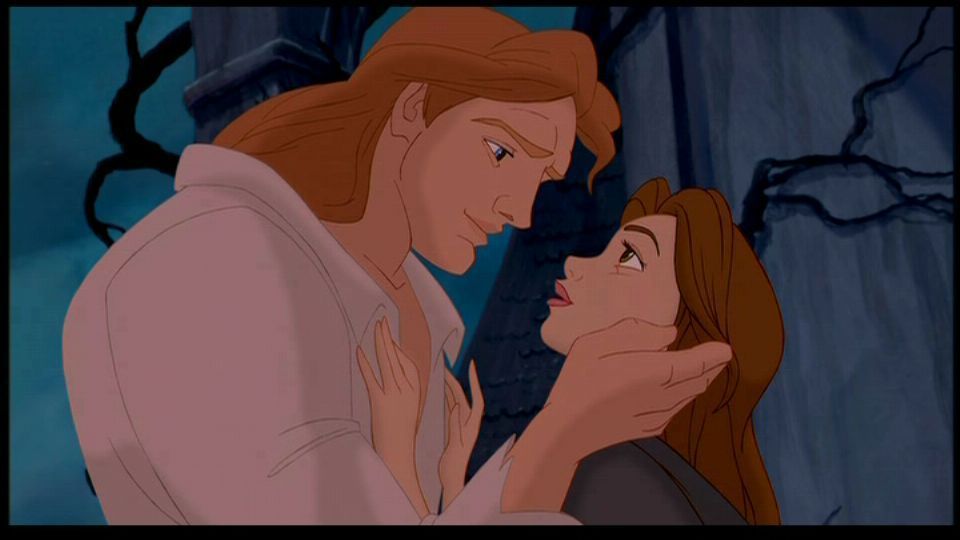
In truth, her story resembles the story "Beauty and the Beast", in terms of learning to love another for who they are inside, instead of the outside. Her story tells us about a Knight who commits a terrible crime and is told by the queen that the only way to save his life is if he finds out what a woman wants (the beast commits a crime of judgment, and must learn to love another or have his life ruined forever). The knight finds an old woman who promises to help him (the beast meets Belle, who helps him). He then must keep a promise to the old woman in exchange for his life (Belle has to remain with the beast forever in exchange for her father). He has his life but then he must learn to love the old woman, since they marry (Belle and the beast must learn to love people for who they are.)
The knight learns that women desire to be in charge of their husbands or lovers, but he learns so much more than this, in the following scene.
"Choose now," she said, "one of these two things:
To have me ugly and old until I die,
And be to you a true, humble wife,
And never displease you in all my life,
Or else you will have me young and fair,
And take your chances of the crowd
That shall be at your house because of me,
Or in some other place, as it may well be.
Now choose yourself, whichever you please."
At this point the Knight is being tested to see if he learned from his year long experience. He has the choice between young and foolish, or old and true, sweet wife. It is a choice he has to make, or so the reader thinks at first glance.
This knight deliberates and painfully sighs,
But at the last he said in this manner:
"My lady and my love, and wife so dear,
I put me in your wise governance;
Choose yourself which may be most pleasure
And most honor to you and me also.
I do not care which of the two,
For as it pleases you, is enough for me."
"Then have I gotten mastery of you," she said,
"Since I may choose and govern as I please?"
"Yes, certainly, wife," he said, "I consider it best."
He has learned his lesson, and allows his wife to choose! This shows that the wife of bath believes that bad men can become good if they are directed in the correct direction.
"Kiss me," she said, "we are no longer angry,
For, by my troth, I will be to you both --
This is to say, yes, both fair and good.
I pray to God that I may die insane
Unless I to you be as good and true
As ever was wife, since the world was new.
And unless I am tomorrow morning as fair to be seen
As any lady, empress, or queen,
That is between the east and also the west,
Do with my life and death right as you please.
Cast up the curtain, look how it is."
And when the knight saw truly all this,
That she so was beautiful, and so young moreover,
For joy he clasped her in his two arms. .
His heart bathed in a bath of bliss.
A thousand time in a row he did her kiss,
And she obeyed him in every thing
That might do him pleasure or enjoyment.
The old lady becoming beautiful and true to her husband shows that there is a reward for all good that we do. It also shows that the wife of bath believes that women should have a choice (just like in beauty and the beast, Belle has a choice in who she will give her heart to)
"What makes a beast, and what makes a man?"- The Hunchback of Notredam
Saturday, September 4, 2010
A Story Teller Telling A Tale Of A Story Teller Telling a Tale of a Tale

In the Millers Tale, we are first introduced to the miller in the prologue. We have not met any narrators in the previous story of "The Knights Tale." In this tale, the Miller is our narrator, or so we are told by the narrator. We have a narrator (Geofrey Chaucer) introducing the previous narrator (the host), and then tries to introduce the Monk as the next narrator, but is then interrupted by the drunk Miller. The Miller becomes our new narrator and begins to tell us a tale about a carpenter and his wife.
3137 But first I make a protestacioun
But first I make a protestation
3138 That I am dronke; I knowe it by my soun.
That I am drunk; I know it by my sound.
3139 And therfore if that I mysspeke or seye,
And therefore if that I misspeak or say (amiss),
3140 Wyte it the ale of Southwerk, I you preye.
Blame it on ale of Southwerk, I you pray.
3141 For I wol telle a legende and a lyf
For I will tell a legend and a life
3142 Bothe of a carpenter and of his wyf,
Both of a carpenter and of his wife,
3143 How that a clerk hath set the wrightes cappe."
How a clerk has set the carpenter's cap (fooled him)."
We supposedly have one narrator, the Miller, throughout the whole story. But Chaucer continuously interrupts Miller adding in his own comments. He basically says sorry to the reader for such a terrible tale, because it does not compare to the greatness of "The Knights Tale".
We can attempt to compare "The Knights Tale" and "the Millers Tale", but there is not that much to compare. There is no godly intervention in "The Millers Tale." There are two men that are fighting for the love of the woman, and there is a competition in both. But either than those two things, they are not identical in the slightest way. The Millers Tale is just a crazy romance, and "The Knights Tale" is a fight of Love VS Victory. "The Knights Tale" is more romantic than "the Miller" which is brusquer.
Chaucer presents the story of the carpenter and his young wife, as a second best story to the story of Arcite and Palamoun. Nick and Absoloun are fools just like Arcite and Palamoun, but are chasing after an already married woman. This story is not a proper one, instead it parody’s the one told by the host.
Vocabulary in the Millers Tale:
Talisman:
Primrose:
Paternoster:
Thursday, September 2, 2010
All Is Fair In Love And War
The Knights Tale Part 3 and 4.
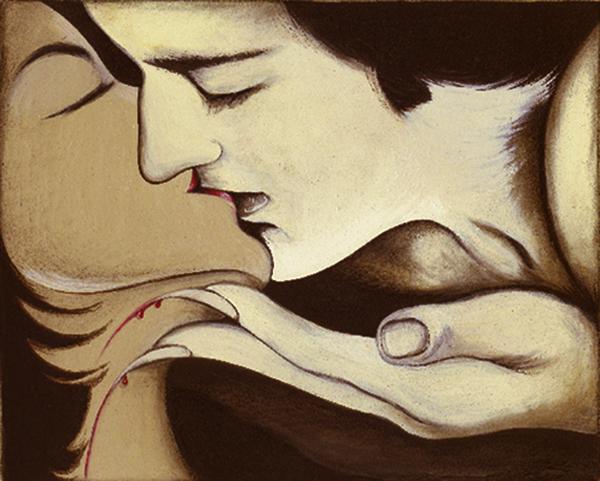
Here we see three different parts of humanity: love, war, and sex. Palamoun prays to Venus so that he may live his life with Emeyle, Arcite prays to Mars for victory, and Emeyle prays to Diane for her virginity. Emeyle ends up asking for the man who loves her most will end up marrying her.
This part of the tale is the passion of love versus the want for victory, and both appear at the end. In a way the gods appear imperfect. They twist the prayers around so that they can please both sides. The temples, of Mars and Venus, also show that imperfection. The temple of Venus is supposed to represent all the perfections of love, but instead it shows all the pain, jealousy and lust that is found in the twisted confused ways of lovers. We also see a twisted idea in the temple built for Mars. When we think of war, at least in history, we usually think of the glories of battle, and all the brave heroes. But instead we are presented with traitors, wimps, and hypocrites. We are shown that the imperfect world reflects its masters; the gods.
But the gods do grant one person's desire (in its own twisted way), although Emeyle is not permitted to remain single for the rest of her life, they grant her last request: to have the man who loves her most passionately, have her. In reality, the gods complete the tasks requested by each person. Palamoun acquires Emeyle as his wife, Arcite receives "victorie" and Emeyle has the man who loves her most.
All is fair in love and war (especially with the added gods).
This part of the tale is the passion of love versus the want for victory, and both appear at the end. In a way the gods appear imperfect. They twist the prayers around so that they can please both sides. The temples, of Mars and Venus, also show that imperfection. The temple of Venus is supposed to represent all the perfections of love, but instead it shows all the pain, jealousy and lust that is found in the twisted confused ways of lovers. We also see a twisted idea in the temple built for Mars. When we think of war, at least in history, we usually think of the glories of battle, and all the brave heroes. But instead we are presented with traitors, wimps, and hypocrites. We are shown that the imperfect world reflects its masters; the gods.
But the gods do grant one person's desire (in its own twisted way), although Emeyle is not permitted to remain single for the rest of her life, they grant her last request: to have the man who loves her most passionately, have her. In reality, the gods complete the tasks requested by each person. Palamoun acquires Emeyle as his wife, Arcite receives "victorie" and Emeyle has the man who loves her most.
All is fair in love and war (especially with the added gods).
Subscribe to:
Posts (Atom)